





Kids Are Learning About Money Everywhere Except Where It Matters Most: New Acorns Early Report Reveals the Financial Habits Shaping America's Kids
Second Annual Money Matters for Kids Report Finds Digital Spending Is Outpacing Financial Education, But Early, Hands-On Money Experiences May Build Confidence That Lasts
IRVINE, Calif. - August 11, 2026 – Acorns Early today released its second annual Money Matters for Kids Report, revealing how America's youngest generation is forming financial habits in a world where spending has become increasingly digital, financial advice increasingly social, and the basics of building real wealth getting lost in the noise.
Based on a nationwide survey of 2,000 U.S. parents and 2,000 kids ages 6–17, the report paints a picture of a generation growing up surrounded by money, but not always learning how it works. Kids are spending virtual currency before they understand investing, consuming financial content before they know who to trust, and navigating an increasingly complex financial world while many parents admit they don't feel equipped to guide them.
The findings also reveal something encouraging: when kids are given real opportunities to save, invest, and make financial decisions early, parents report their kids develop healthier money habits, greater confidence, and more interest in understanding how wealth is built over time.
“Our first Money Matters Report showed that parents wanted help having money conversations,” said Noah Kerner, CEO of Acorns. “This year's findings show something even bigger. Kids aren't waiting for those conversations anymore. They're learning about money every day, from algorithms, creators, games, and social media. The internet has become incredibly good at teaching kids how to spend money. We have to become much better at teaching them how to grow it.”
America's Kids Are Growing Up Fluent in Digital Spending
The report finds that digital commerce is becoming second nature long before traditional financial concepts.
- 80% of kids say they are familiar with in-game virtual currencies, while only 42% say they understand stocks, a gap that is widest among the youngest children, where just 21% of 6-to-9-year-olds say they understand what a stock is.
- Kids who spend on digital goods put an average of $23.60 a month toward them — nearly $284 a year on products that exist only online. Counting the roughly one in five children who spend nothing, the average across all kids is $18.52 a month, or about $222 a year.
- 60% of kids are already familiar with Buy Now, Pay Later, and 30% believe financing groceries this way is a good financial decision.
- Only 28% correctly recognize that day traders do not almost always make money — 19% wrongly believe they do, and 54% simply aren’t sure.
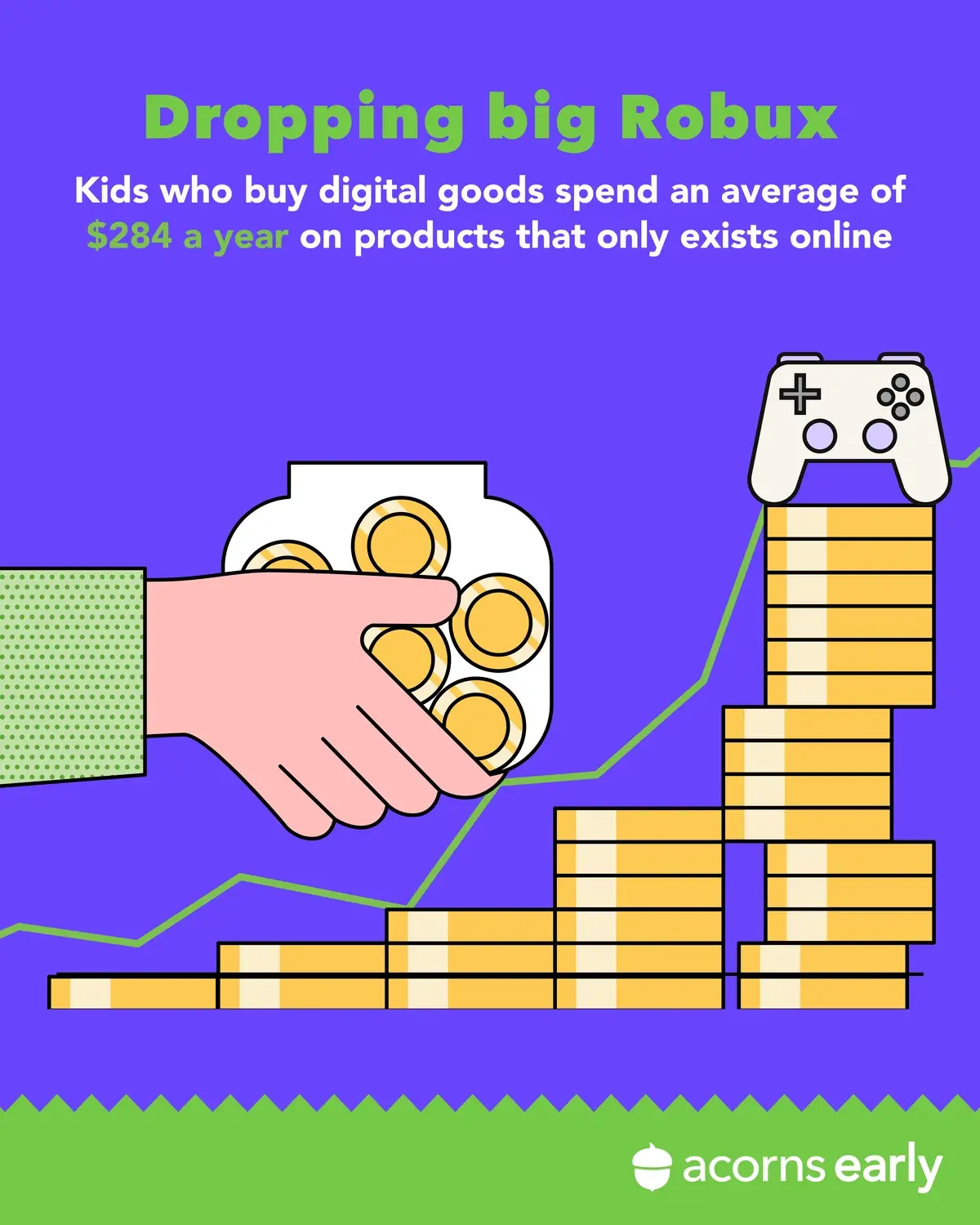
Today's kids are becoming financially active earlier than previous generations, but much of that activity happens in digital environments that make spending effortless while offering few opportunities to understand long-term investing, compounding, or delayed gratification.
Kids Are Listening to the Internet But They Don't Trust It
Financial content has become a regular part of childhood. Kids report learning about money through YouTube, video games, TikTok, creators, and other digital platforms. Yet despite this constant exposure, very few consider those voices trustworthy.
- Just 2.8% of kids say they would trust an online influencer to teach them about money.
- At the same time, 73% believe becoming an influencer is a realistic path to wealth, while 78% say they would like to become content creators themselves.
- Despite the growing influence of digital culture, however, the report uncovers an encouraging counterweight: 85% of kids still believe that consistently saving money can build wealth over time, and 91% believe doing well in school is an important step toward achieving their financial goals.
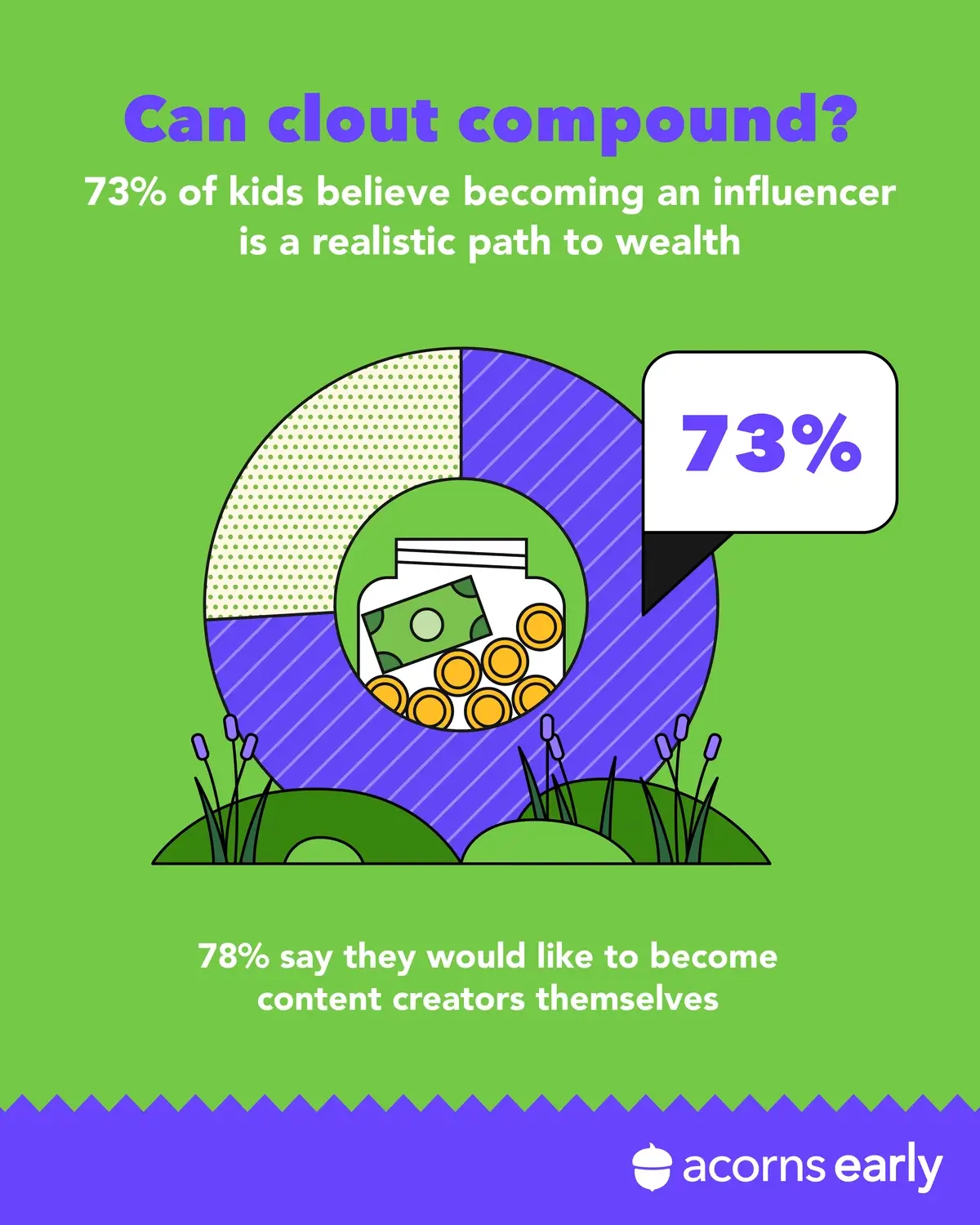
The findings suggest that while digital culture is reshaping kids' perceptions of money, the next generation has not abandoned the fundamental belief that patience, education, and consistency still matter.
Parents Want to Help But Many Don't Know Where to Start
The report also highlights a growing confidence gap among parents. Although nearly every parent recognizes the importance of financial education, many admit they struggle to lead those conversations themselves.
- One in three parents say they've avoided talking about money because of their own financial situation, experiences with money, or money habits.
- 57% say discussing topics such as drugs, alcohol, puberty, or sex would actually be easier than talking about money.
- 46% look for trusted tools or apps to teach financial concepts rather than do it themselves.
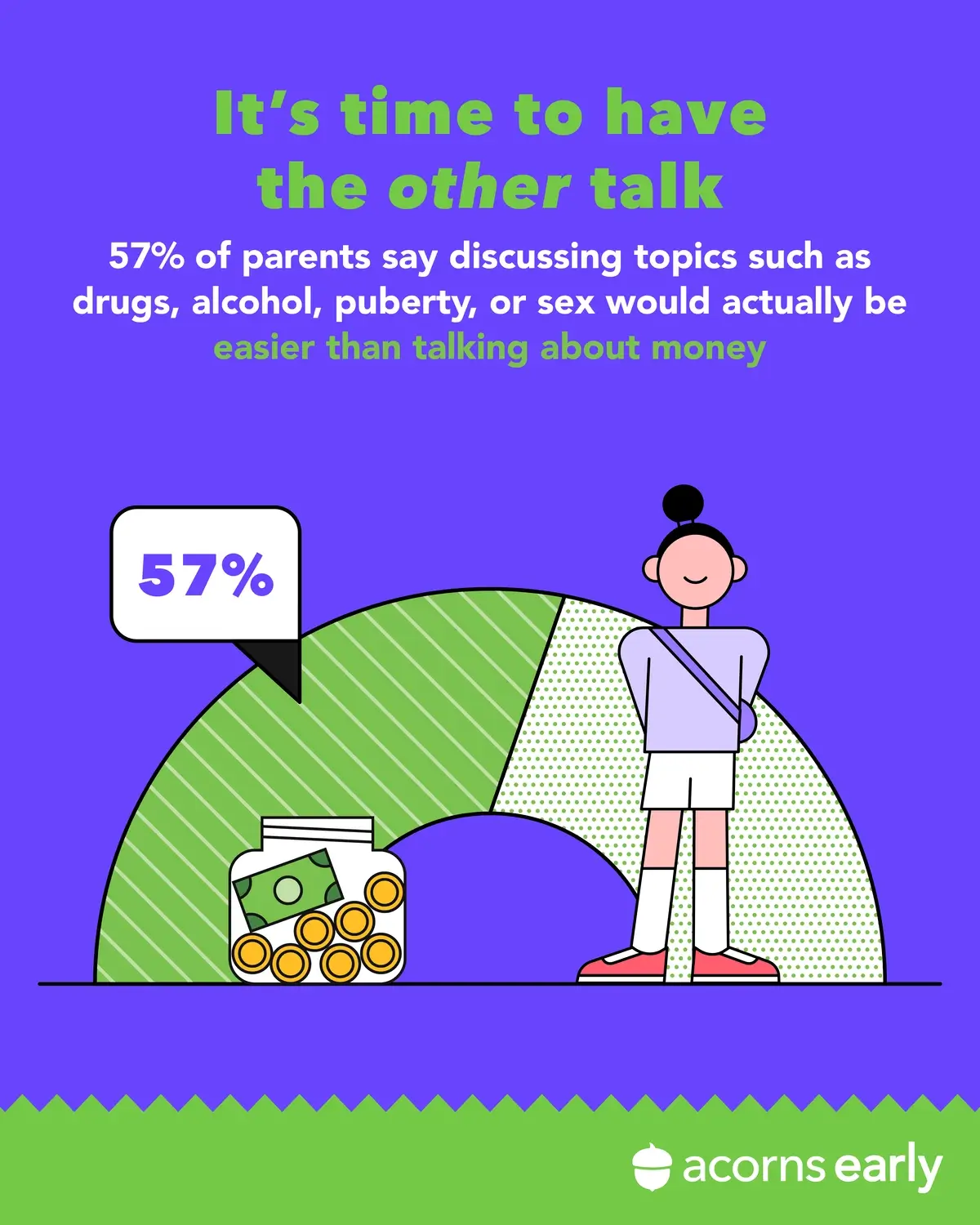
The findings reinforce a challenge facing many American families: parents understand that financial education matters but often feel they lack the confidence, knowledge, or language to begin.
The Good News: Experience Changes Everything
While much of the report highlights the challenges families face, its strongest finding points toward a clear solution. Among parents whose kids already have a savings or investment account, 59% say they have seen at least one positive change in their child's money habits — more thoughtful spending, more curiosity about growing money, or fewer impulse buys. Parents of the youngest children, ages six to nine, were the most likely to notice a difference.
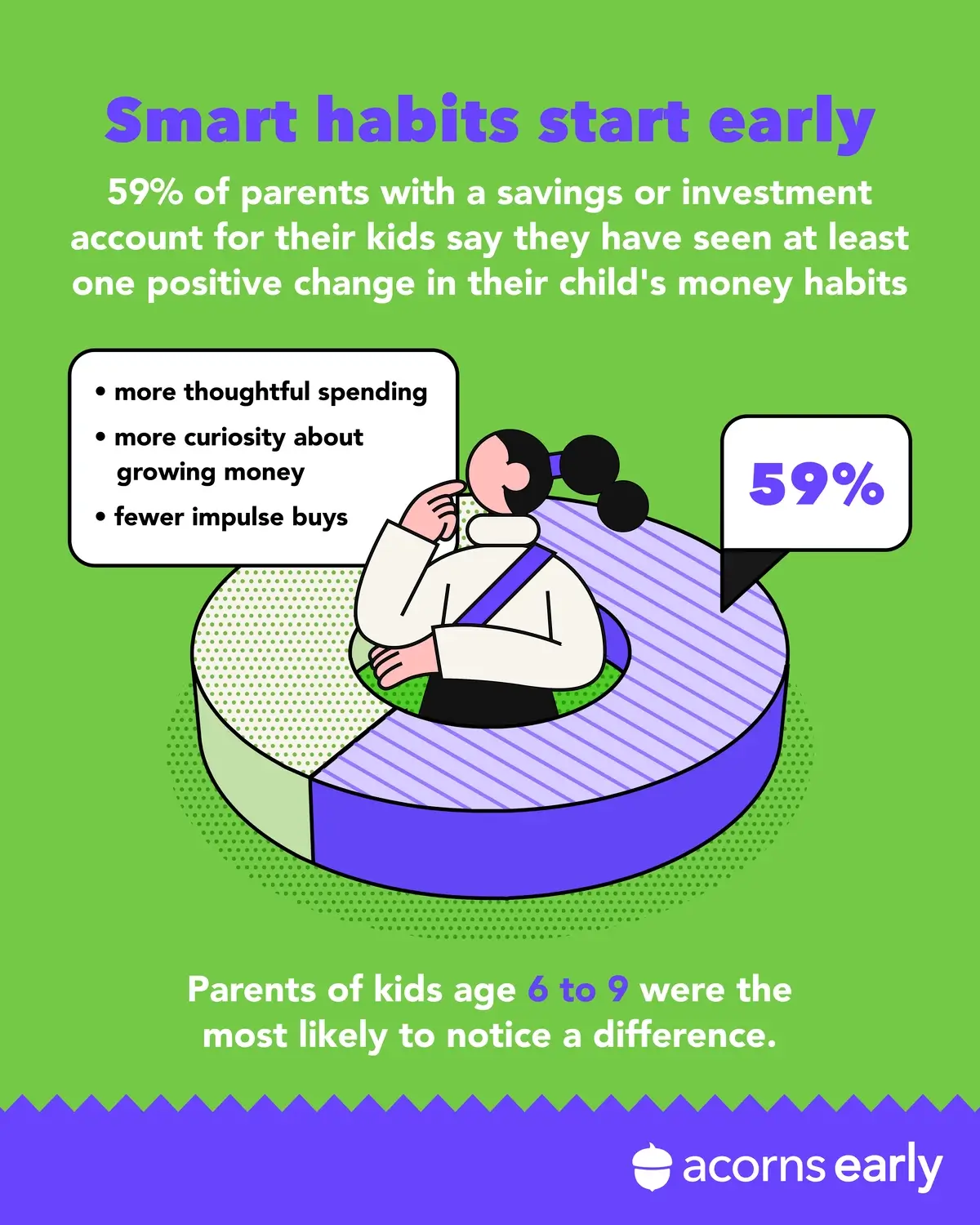
Acorns customers have invested over $1.28B in their children through Acorns Early Invest. By teaching that wealth is built with small decisions, made consistently over time, Acorns Early aims to close the financial literacy gap and prove that the real investment is the confidence a child carries for life. To learn more about Acorns Early, visit acorns.com/early.
About the Study
The Acorns Early Money Matters Report for Kids 2026 is based on a survey of 2,000 U.S. parents of children aged 6 to 17, together with one child from each household, conducted by Opinium Research on behalf of Acorns. Fieldwork was carried out online between July 6 and July 14, 2026. Children aged 6 to 9 completed their portion of the survey with a parent's help, and older children could choose to have a parent present to assist; parents answered the questions directed to them. Data was not weighted. Findings based on fewer than 50 respondents are directional only. Opinium Research is a member of the British Polling Council and abides by its rules.
About Acorns
Acorns is the financial wellness company helping everyday Americans grow their money for the long term. Since 2014, Acorns has grown into a global company with multiple life stage products serving the needs of kids, teens, adults and parents. Named one of America's Best Financial Services of 2026 by TIME, Acorns has served over 16 million people, and helped customers save & invest over $33 billion dollars, much of it from spare change and small amounts. To date, Acorns customers have invested over $1.28B in their children through Acorns Early Invest.


Investment advisory products and services offered by Acorns Advisers, LLC ("Acorns"), an SEC Registered Investment Adviser. Brokerage products and services are provided by Acorns Securities, LLC, an SEC registered broker-dealer, Member FINRA/SIPC. Acorns is not a bank. Banking services issued by Lincoln Savings Bank or nbkc bank, members FDIC. © Acorns Early Inc. Acorns Early card is issued by nbkc Bank, member FDIC, pursuant to license by Visa®, and Community Federal Savings Bank, member FDIC, pursuant to license by Mastercard International. Cardholder Terms and limits apply. For more information, visit www.acorns.com and acorns.com/early.


