





Money is often the #1 source of stress, but it can also be a source of opportunity. Our latest research for Mental Health Awareness Month explores how families across the U.S. are navigating the highs and lows of their financial lives.
THE PSYCHOLOGICAL CHALLENGE: Restoring Peace of Mind
Financial stress isn’t a personal failure; it’s a heavy weight that millions of Americans carry every day. By understanding the deep connection between our finances and our mental health, we can begin to prioritize wellness over worry and turn anxiety into action.
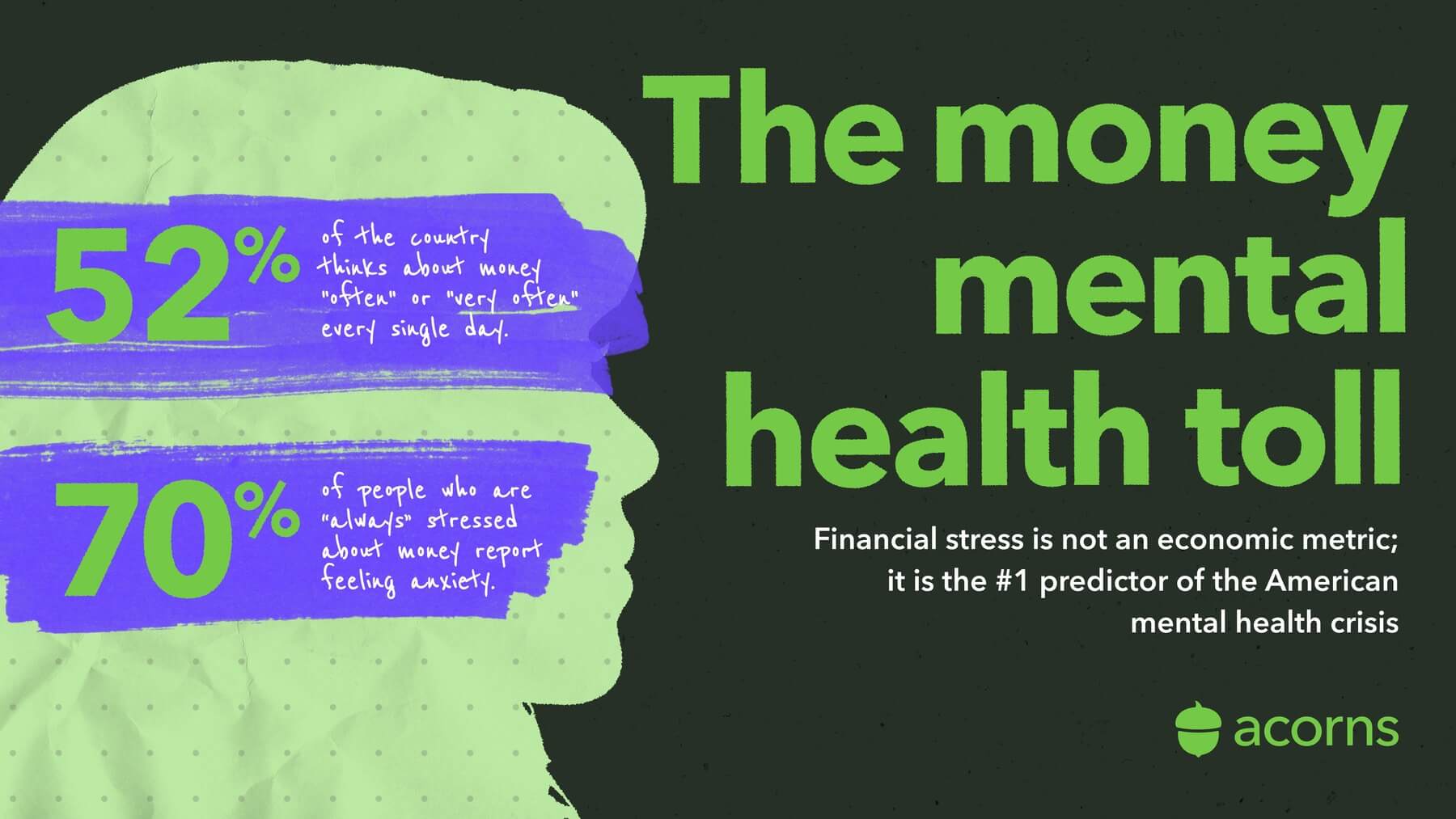
- 70% of people who are “always” stressed about money report feeling anxiety, compared to only 10% of those who are "never" stressed.
- Those "always" stressed average 3.7 mental health symptoms, nearly 8x higher than the 0.5 symptoms of the stress-free.
- 45% of respondents have experienced anxiety due to financial pressure.
- 52% of respondents (over half) think about money “often” or “very often” every single day.
- A negative net worth correlates to a 65% anxiety rate. Once net worth crosses $800k, that rate plummets to 24%.
- Carrying $30k+ in debt increases reported mental health symptoms by 53% compared to those who were debt-free.
- 1 in 3 Americans surveyed (33%) report losing sleep specifically due to financial stress.
- Parents report significantly higher symptoms than non-parents:
- Difficulty Sleeping: 38% vs. 30%
- Feeling Overwhelmed: 46% vs. 41%
- 1 in 5 respondents (22%) say talking about money with a partner is a primary source of stress and arguments.
THE BEHAVIOR OF SHAME: Breaking the Silence
One difficult part of financial struggle is feeling like you have to go it alone. By bringing these taboo conversations into the light, we remove the power of shame and create a community where transparency leads to progress.
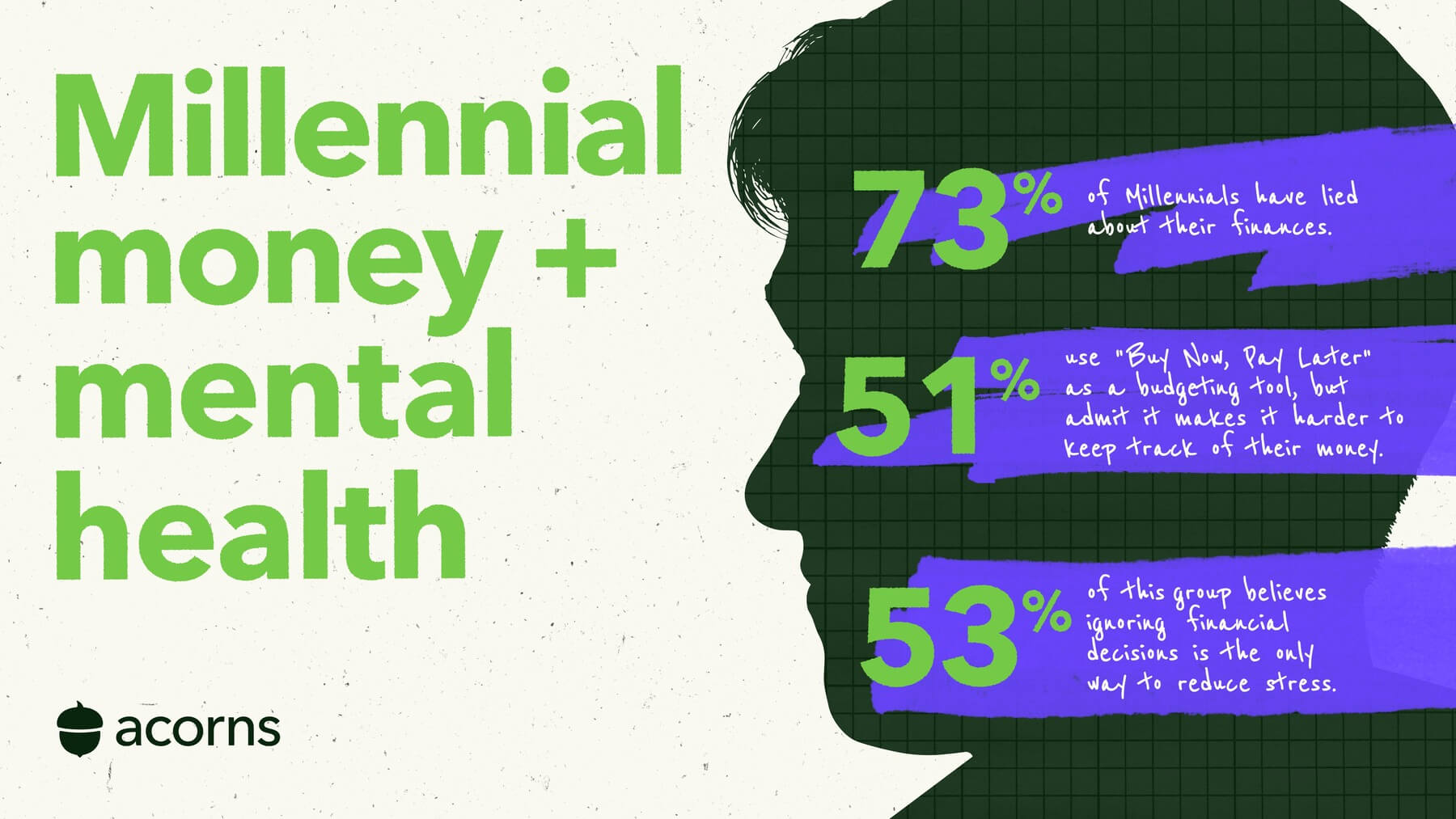
- 73% of Millennials have lied about their finances. Only 11% have never hidden financial truths.
- What We Hide: #1 Financial struggles (25.5%), #2 Spending habits (22%), #3 Income (20.5%), #4 Debt (19.3%).
- 48% of people with a net worth over $800k still lie about money often or very often.
- 1 in 4 respondents (25%) avoids hobbies or social activities due to money stress.
- Social withdrawal is highest in the $100k–$120k income bracket (33%), suggesting that ”feeling broke” is about perceived adequacy, not just income.
- 44% of Americans surveyed believe that simply ignoring financial decisions reduces their stress.
THE PARTICIPATION GAP: Opening the Gates
The American Dream isn't dead; it just needs a lower entry point. For too long, people felt they didn't have enough to start. Acorns is here to show that the smallest seed - even spare change - is enough to grow a future. Of Americans surveyed:
- 32% (nearly 1 in 3) have never opened an investment account.
- 50% of households earning under $30k have never invested, compared to only 7% of high earners.
- On average, Americans don't start investing until age 30.
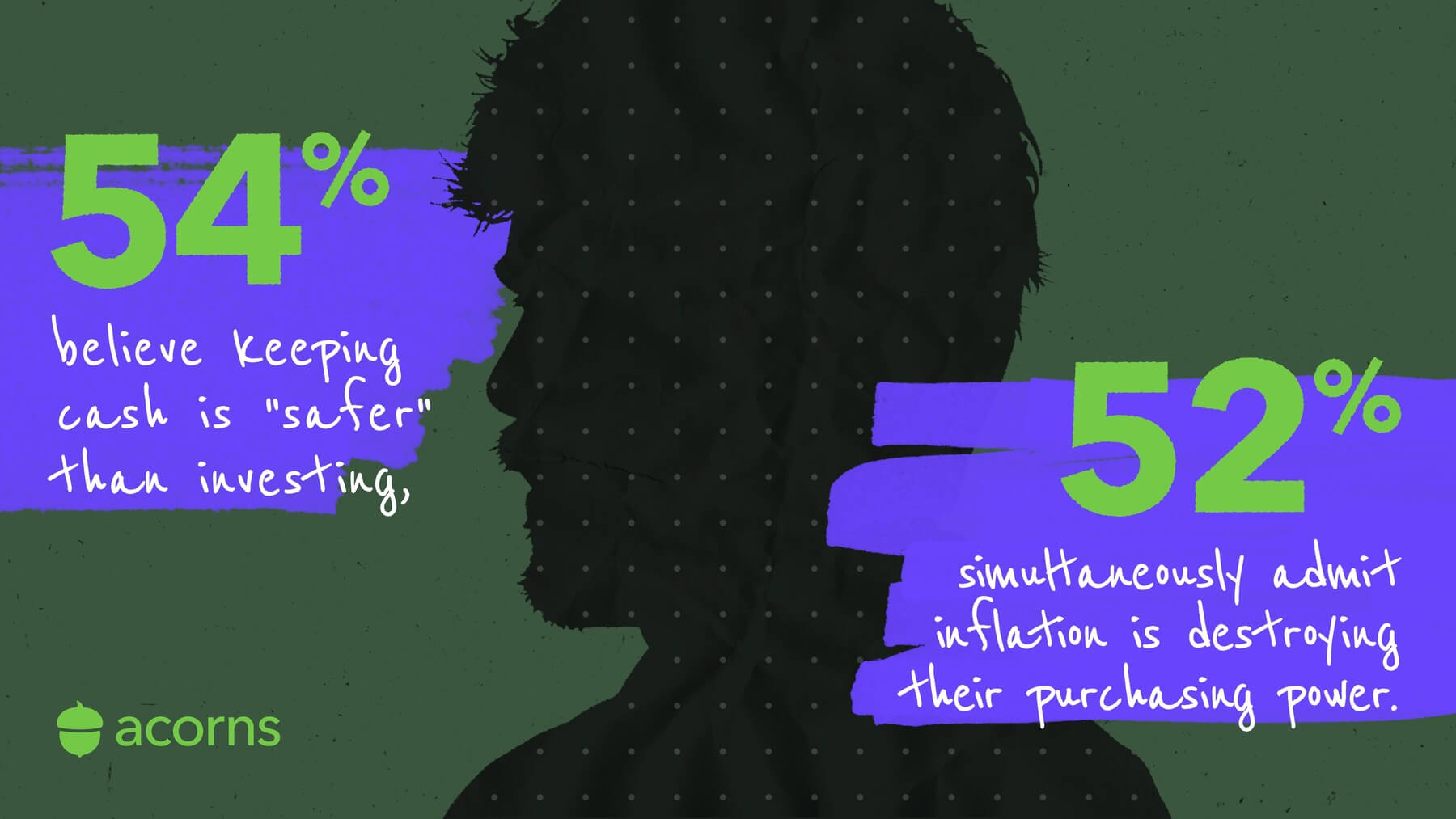
- 54% believe keeping cash is “safer” than investing, while 52% simultaneously report inflation is damaging their purchasing power.
- 43% believe timing the market is the best way to build wealth.
- The #1 and #2 reasons for non-participation are tied: Lack of Funds (32%) and Lack of Knowledge (32%).
THE GENDER DIVIDE: Empowering Confidence
Financial confidence is a skill, not a trait. While women often face higher levels of anxiety in the current system, there is a massive opportunity to close the gap through tools that prioritize long-term security and steady growth.
- 36% of women have never invested, vs. 27% of men. Men start investing at age 28; women start at 31.
- 50% of women report financial anxiety, vs. 39% of men.
- Women are more likely to view cash as "safe" (58% vs. 49%). Men are twice as likely to hold cryptocurrency (20% vs. 10%) and engage in market timing (50% vs. 36%).
- 56% of men see a clear growth path in their career, compared to only 42% of women.
DEEP DIVE: The Resilient Generation (Ages 25–34)
This generation is working harder than any before it. Despite the pressures of modern debt and spending traps, they are the most entrepreneurial group in the country, proving they have the grit to build something better.
- 44% of 25–34-year-olds report having sacrificed their mental or physical health just to stay financially afloat.
- 51% use Buy Now, Pay Later as a budgeting tool, but 51% admit it makes tracking spending harder.
- 53% of this group believes ignoring financial decisions is the only way to reduce stress.
- 25-34 year olds lead the “Startup Surge,” with 18% running their own business.
THE ANTIDOTE: The Education Dividend
Financial Education can be a powerful equalizer. When families teach their kids how money actually works, they give them the tools to own their financial future.
- Respondents who learned about money at home from their families reported 2x the wealth of those who didn't.
- Financial education at school helps, but home is where it sticks. Among respondents, school-only education was associated with 42% higher net worth than those who had no financial education.
- Respondents who reported both home and school education had 121% higher net worth than those with none.
- Respondents with financial education at home were also 50% less likely to carry negative net worth and reported 32% higher financial satisfaction.
WHY ACORNS: Your Partner in Growth
We exist to make the hard parts of money automatic, so you can focus on living your life. Acorns is the quiet engine in the background, turning small habits into life-long security for the everyday American family.
- Since the #1 barrier is “I don't have enough money,” Micro-investing can help lower the entry point for non-investors.
- With 51% of people receiving zero education, Acorns replaces the missing home-education model with in-app, bite-sized learning.
- In a world where 73% lie about money, Acorns provides a private, automated, low-judgment environment to build wealth.
- When asked, Americans want two things equally: Getting out of debt (22%) and Learning how to invest (22%). Acorns helps people build investing knowledge while forming small, consistent money habits that can help reduce debt over time.
About the Study
The research was conducted anonymously by CensusWide and commissioned by Acorns. This survey was not directed at Acorns customers. Any response collected from a customer was coincidental. The survey was conducted in April 2026, using CensusWide’s nationally representative online research panel. The sample population consisted of 1,875 U.S. consumers ages 18-65 to explore the intersection of financial behavior, professional empowerment, and mental wellbeing.


This material has been presented for informational and educational purposes only. The views expressed in the articles above are generalized and may not be appropriate for all investors. The information contained in this article should not be construed as, and may not be used in connection with, an offer to sell, or a solicitation of an offer to buy or hold, an interest in any security or investment product. There is no guarantee that past performance will recur or result in a positive outcome. Carefully consider your financial situation, including investment objective, time horizon, risk tolerance, and fees prior to making any investment decisions. No level of diversification or asset allocation can ensure profits or guarantee against losses. Article contributors are not affiliated with Acorns Advisers, LLC. and do not provide investment advice to Acorns’ clients. Acorns is not engaged in rendering tax, legal or accounting advice. Please consult a qualified professional for this type of service.
Investment advisory products and services offered by Acorns Advisers, LLC ("Acorns"), an SEC Registered Investment Adviser. Brokerage products and services are provided by Acorns Securities, LLC, an SEC registered broker-dealer, Member FINRA/SIPC. Acorns is not a bank. Banking services issued by Lincoln Savings Bank or nbkc bank, members FDIC. The Acorns Early card is issued by Community Federal Savings Bank, member FDIC, pursuant to license by Mastercard International. For more information, visit www.acorns.com.
Spare change invested with Round-Ups® is transferred from your linked funding source (checking account) to your Acorns Invest account when activated. Round-Up investments from an external account will be processed when your Pending Round-Ups reach or exceed $5.
Acorns Later is an Individual retirement account consisting of a Traditional, ROTH or a SEP IRA selected for customers based on investor profile questionnaire answers.
For informational purposes only. This is solely intended to provide notification of an available product or service. This is not a recommendation to buy, sell, hold, or roll over any asset, adopt an investment strategy, or use a particular account type. This information does not consider the specific investment objectives, tax and financial conditions or particular needs of any specific person. Investors should discuss their specific situation with their financial professional.
Acorns Early Invest is a custodial UGMA/UTMA account. Assets in a custodial account are the property of the minor. Each Early Invest account identifies a beneficiary who will have complete control over the Custodial Assets when he or she reaches the default age of transfer determined by the beneficiary’s state of residence or on reaching the age of transfer as elected by you, although such elected age must be at least eighteen (18) years old.
Automatic investing does not ensure a profit or protect against losses. It involves continuous investing regardless of fluctuating price levels.
Acorns receives compensation from business partners to promote or refer customers to such partners for the purchase of non-investment consumer products or services. This type of promotional partnership incentivizes Acorns to refer customers to these businesses instead of businesses that are not partners of Acorns. This affects the ability of Acorns to provide unbiased promotions and could mean that the products and/or services of other businesses, that do not compensate Acorns, may be more appropriate for a customer than the products and/or services promoted by Acorns. Customers are not required to purchase any products and services Acorns promotes.
‘Save and Invest’ refers to a customer’s ability to utilize the Acorns Roundups® investment feature to seamlessly invest small amounts of money from purchases using an Acorns investment account.


